Jengidilaver
The sultan's youngest son goes to the other end of the world to find the magical Jengidilaver his sister longs for.
Tap a word to see it in Turkish · Long press to translate the whole sentence.
Once upon a time, when the sieve was in the straw, a sultan had three sons and a daughter. When the sultan died, the three sons looked after their sister very well. One day, as their sister was walking in the garden, she met an old woman. "My girl," said the woman, "your palace is beautiful, but it lacks something. Without Jengidilaver's bird, Jengidilaver's mirror and Jengidilaver herself, this palace is not complete."
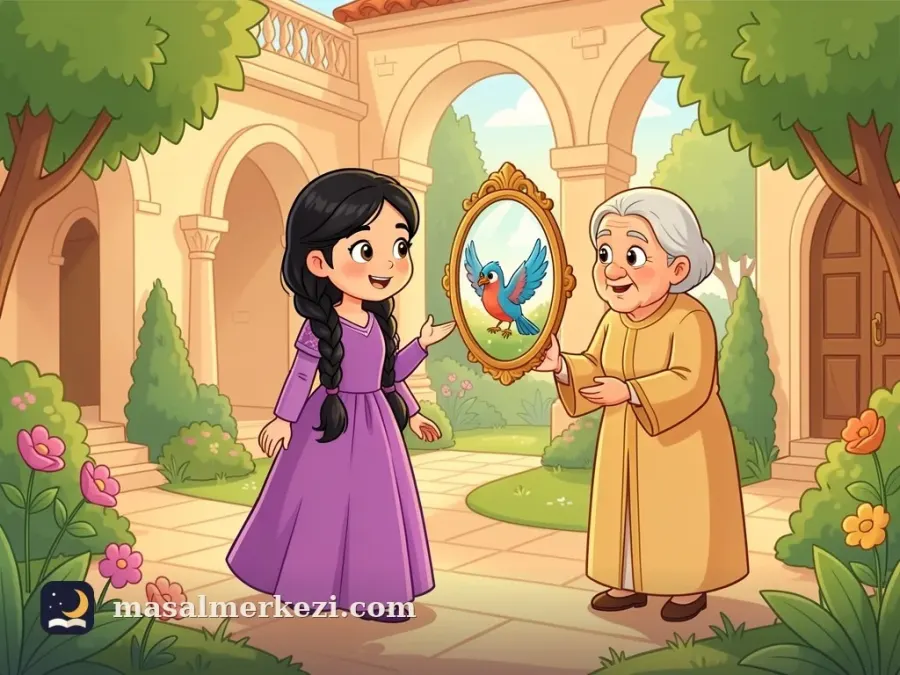
The girl was very moved by these words and began to cry. When her brothers came, she told them her trouble: "Brothers, I want Jengidilaver's bird, her mirror and Jengidilaver herself." "I'll bring them," said the eldest brother, and he set off. Before he left, he gave his sister a ring: "If this ring squeezes your finger, it means something has happened to me." On the way the eldest brother came to the house of a giantess. The giantess showed him the way to Jengidilaver, but she said, "On the road you'll hear voices behind you. Don't you dare turn round and look, or you'll be turned to stone." On the road the eldest brother could not resist the voices behind him, turned to look and was turned to stone. The ring on his sister's finger began to squeeze.
The middle brother set off too and came to the same place. He too could not resist the voices behind him, turned round and was turned to stone. Then it was the youngest brother's turn. The youngest brother stopped his ears with cotton and set off. When he reached the giantess's house, he drank from her breast and became her son. The giantess told him, "When you reach Jengidilaver's palace, you'll see a gate. One half of the gate will be open and the other closed. Close the open half and open the closed half. You'll see a lion and a sheep. In front of the lion there's grass, and in front of the sheep there's meat. Give the grass to the sheep and the meat to the lion."
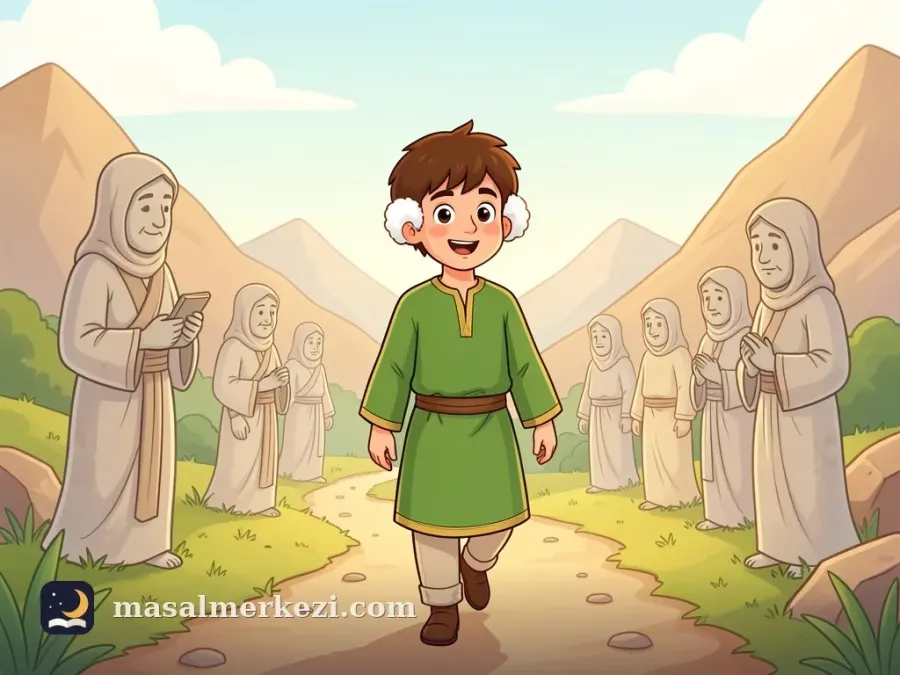
The youngest brother went on his way. Behind him came dreadful sounds, screams and weeping, but because his ears were stopped he did not hear them and did not turn round. At last he reached Jengidilaver's palace. He set the gate as the giantess had told him and gave meat to the lion and grass to the sheep. He went into the garden and saw Jengidilaver. Jengidilaver was a very beautiful girl. But she turned to stone anyone who saw her.
Jengidilaver was asleep. The youngest brother crept up quietly and plucked a hair from her head. The girl woke up and said in astonishment, "How did you get this far? Everyone who comes here is turned to stone!" "I stopped my ears and didn't look behind me," said the youngest brother. Jengidilaver admired his courage and his wits. "What do you want?" she asked.
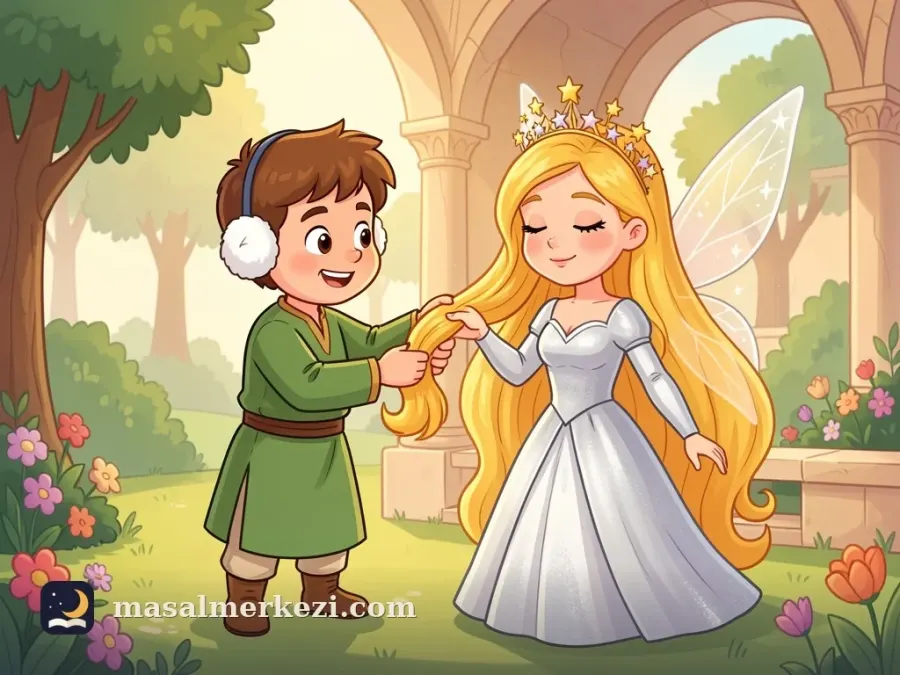
"My sister wants your bird, your mirror and you. And I want to rescue my two brothers, who were turned to stone on the way," said the youngest brother. Jengidilaver gave him a bottle of water: "Sprinkle this water on those who have been turned to stone, and they'll come back to life." She took her bird and her mirror and set off with the youngest brother. On the way they sprinkled water on those who had been turned to stone. One by one the stones came to life; among them were the two brothers, and other princes, lords and travellers too. Everyone thanked the youngest brother.
But the two elder brothers were jealous of their youngest brother. As they rested by a well on the way, they threw him into it. They took Jengidilaver, the bird and the mirror and went back to the palace. "We brought them," they told their sister. But Jengidilaver did not say a word, the bird did not sing, and the mirror showed nothing at all. Their sister was very sad.
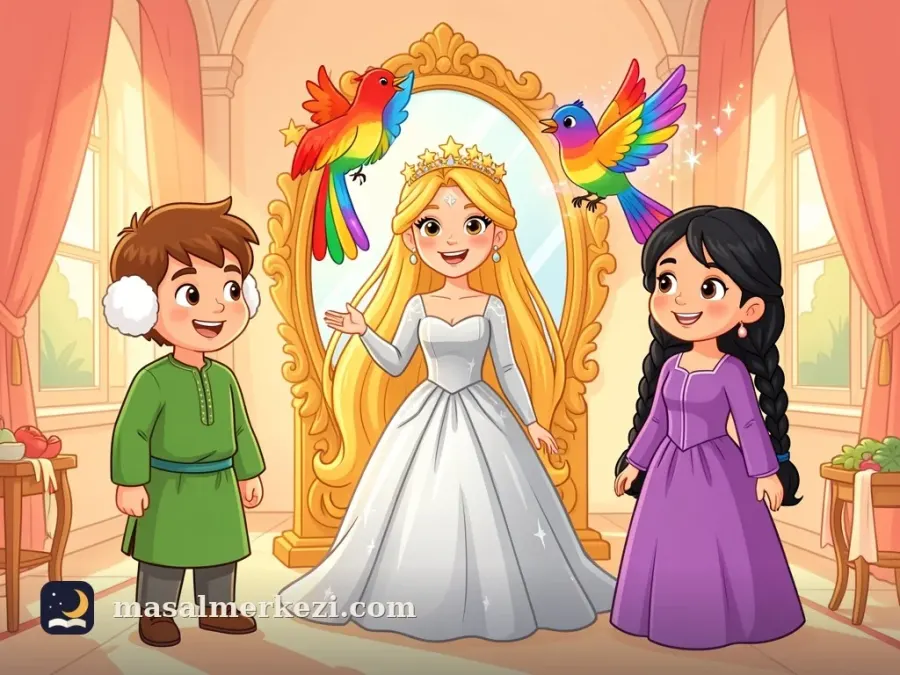
At the bottom of the well, the youngest brother heard the sound of a caravan. When the caravan lowered a bucket into the well for water, he held on to the bucket and was saved. The caravan took him to the city. The youngest brother disguised himself and came to the palace. As soon as Jengidilaver saw him, she began to speak, the bird began to sing, and the mirror showed everything: in the mirror it could be seen how the two brothers had thrown their youngest brother into the well.
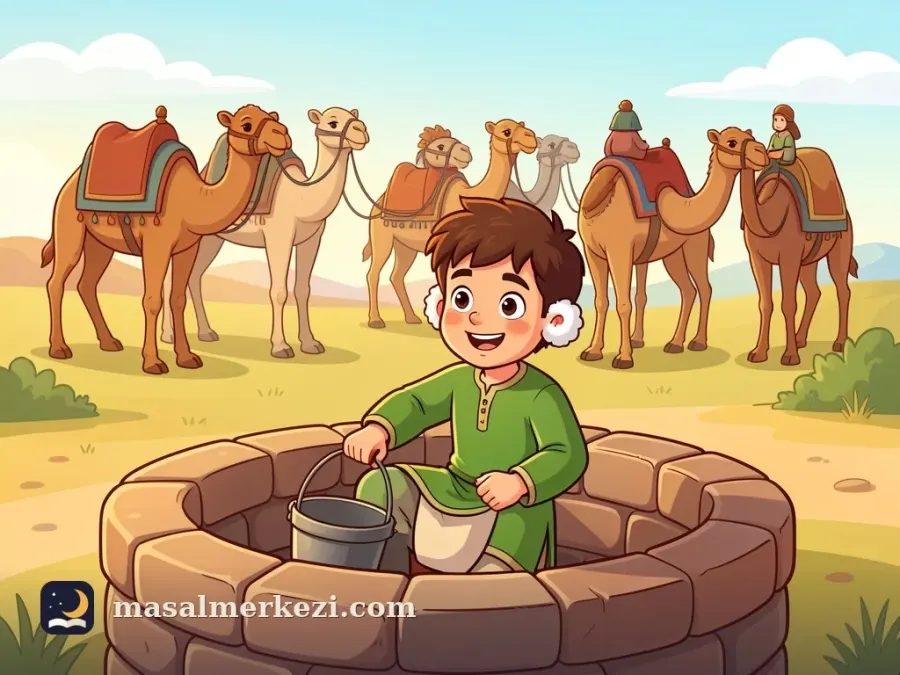
Their sister understood everything. She called her two elder brothers and demanded an explanation. The two brothers were so ashamed that they wished the ground would swallow them, and they confessed what they had done. The youngest brother forgave them, but he gave them some advice: "Brotherhood is worth more than jealousy."
The youngest brother married Jengidilaver. And their sister was overjoyed; to her palace had come the bird, the mirror and, loveliest of all, Jengidilaver. The wedding lasted forty days and forty nights. Three apples fell from the sky: one for the one who told this tale, one for the one who listened, and one for the youngest brother, who closed his ears to evil voices and never turned back from his path.
The tale ends here. Sleep well.
Jengidilaver is a children's tale from Anatolian folk tale, suitable for ages 5-10 and about 4 minutes long. Read it free on Masal Merkezi, play a lullaby or nature sound in the background, tap any word to see its Turkish meaning and save it to your favorites. For similar tales browse the Turkish Folk Tales category.
Sign up and your favorites and reading list follow you on every device.