The Steadfast Tin Soldier
A one-legged tin soldier falls in love with a paper ballerina and sets out on a great journey.
Tap a word to see it in Turkish · Long press to translate the whole sentence.
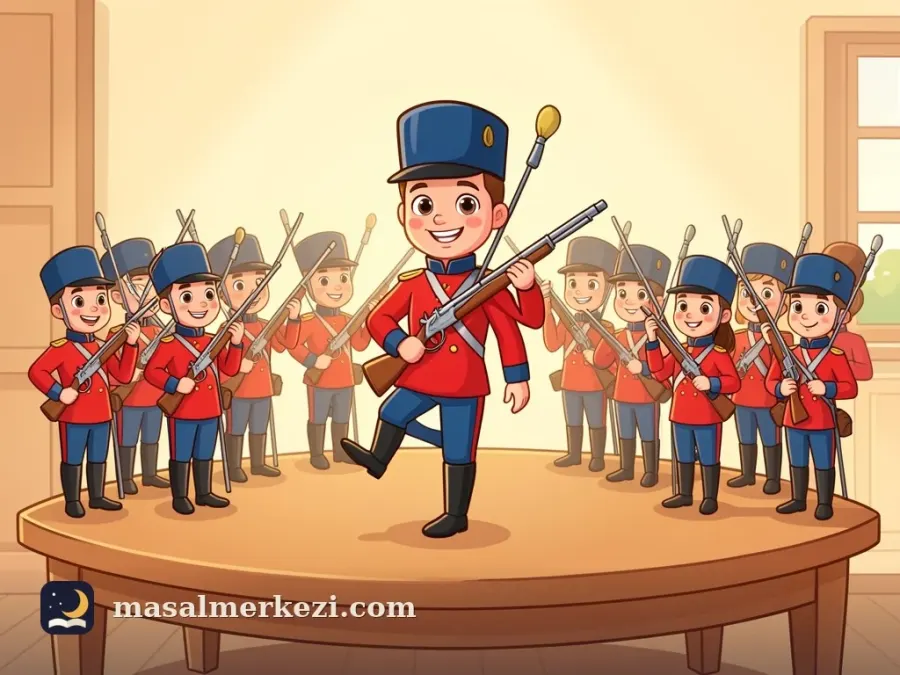
There were once twenty-five tin soldiers. They were all brothers, because they had all been made from the same old tin spoon. They shouldered their muskets and looked straight ahead, and their uniforms were red and blue and very fine. The very first words they heard in this world, when the lid of their box was taken off, were a little boy clapping his hands and shouting: "Tin soldiers!" They had been given to him as a birthday present, and he set them out on the table.
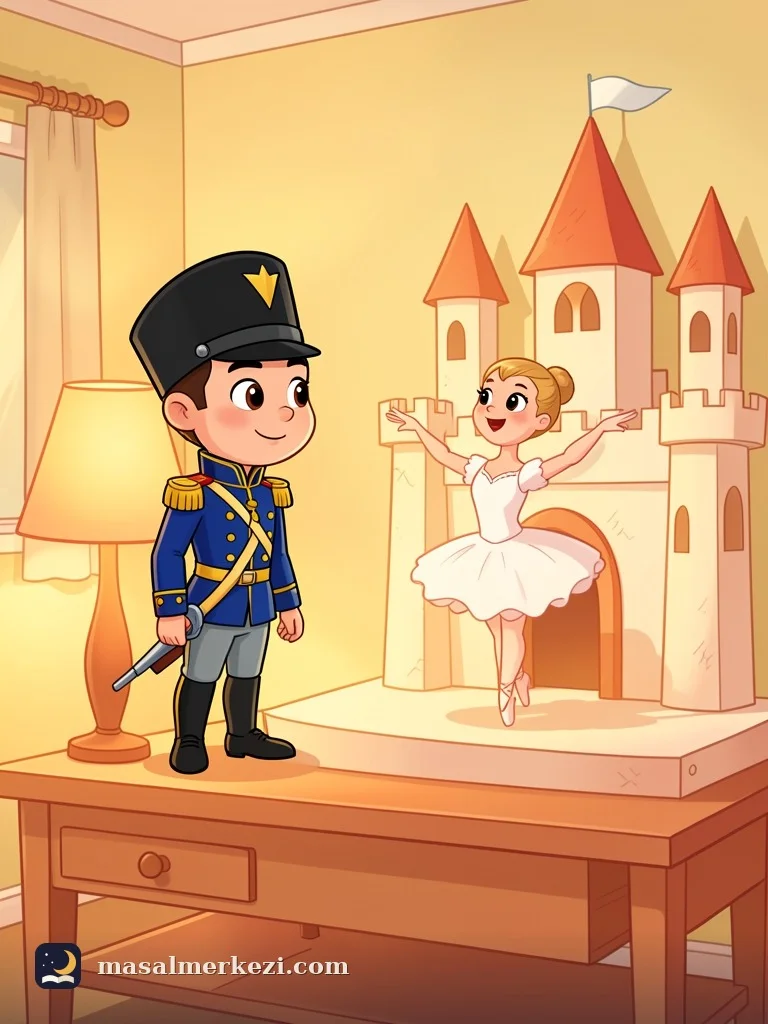
All the soldiers looked exactly alike, except for one, who was a little different. He had only one leg, because he had been made last and there had not been enough tin. But he stood just as firmly on his one leg as the others did on their two. And he is the one this story is about.
On the table where the soldiers were set out there were many other toys. But the one that caught the eye most was a beautiful castle made of paper. Through its little windows you could see right into the halls. In front of the castle little trees stood around a small mirror that looked like a lake. Wax swans swam on it and looked at their reflections. It was all very pretty, but the prettiest of all was a little lady standing in the open doorway of the castle. She too was cut out of paper, but she wore a skirt of the finest gauze and a narrow blue ribbon over her shoulder like a scarf. In the middle of the ribbon was a shining spangle as big as her whole face. The little lady was stretching out both her arms, for she was a dancer. She had lifted one leg so high that the tin soldier could not see it at all, and he thought that she, like him, had only one leg.

"She would be just the wife for me," thought the tin soldier. "But she's very grand. She lives in a castle, and I have only a box, and there are twenty-five of us in it. That's no place for her. Still, I must try to get to know her." Then he lay down full length behind a snuffbox on the table, and from there he could watch the graceful little lady, who went on standing on one leg without losing her balance.
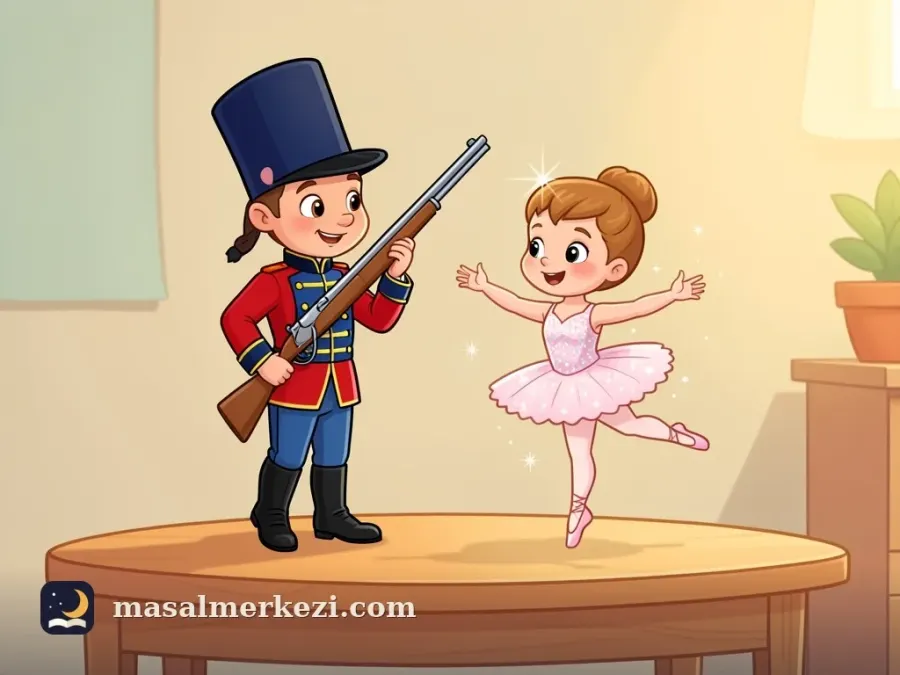
When evening came, all the other tin soldiers were put back in their box, and the people of the house went to bed. Then the toys began to play; they played at visiting, at war, at holding a ball. The tin soldiers rattled in their box, because they wanted to join in, but they could not lift the lid. The nutcracker turned somersaults, and the pencil scribbled across the slate; there was such a noise that the canary woke up and began to talk too, and in verse. The only two who did not move were the tin soldier and the little dancer. She stood straight up on the tip of her toe with both arms outstretched, and he stood just as firmly on his one leg, and he never took his eyes off her for a moment.
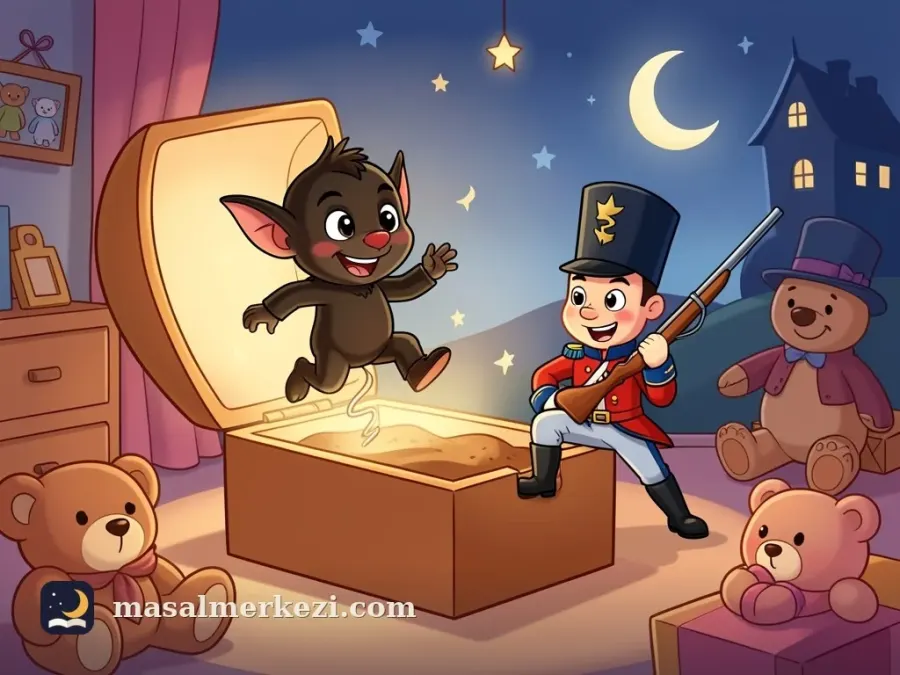
When the clock struck twelve, "pop!" up flew the lid of the snuffbox. There was no snuff inside, but a little black goblin; it was a toy. "Tin soldier," said the goblin, "keep your eyes to yourself!" But the tin soldier pretended not to hear. "Just you wait till tomorrow!" said the goblin.
In the morning, when the children got up, they put the tin soldier on the windowsill. Whether it was the goblin's doing or the wind's, nobody knows, but suddenly the window flew open, and the soldier fell head first from the third floor. It was a terrible fall. He landed with his leg in the air, standing on his cap, with his bayonet stuck between the paving stones. The maid and the little boy came down at once to look for him; but although they almost stepped on him, they could not see him. If the soldier had shouted "Here I am!" they would have found him; but he did not think it proper to shout out loud while he was in uniform.
It began to rain; the drops fell faster and faster until it was a real downpour. When it was over, two street boys came by. "Look," said one, "there's a tin soldier! Let's send him sailing." They made a boat out of a newspaper, put the soldier in it, and away it sailed down the gutter. The boys ran alongside, clapping their hands. Goodness, what waves there were in the gutter, and what a current! The paper boat rocked up and down, and sometimes it spun round so fast that the tin soldier grew dizzy. But he stood firm, never flinched, looked straight ahead and kept his musket on his shoulder.

Suddenly the boat drifted under a long drain board. It was as dark there as it was in his box. "I wonder where I'm going now," he thought. "Yes, it's that goblin's doing. Ah, if only the little lady were here in the boat with me, I wouldn't mind if it were twice as dark." Just then a big water rat that lived under the drain board came along. "Have you got a passport?" asked the rat. "Show me your passport!" But the tin soldier kept silent and held his musket even tighter. The boat sailed on, and the rat came after it. It gnashed its teeth and shouted to the sticks and straws: "Stop him! Stop him! He hasn't paid the toll! He hasn't shown his passport!"
But the current grew stronger and stronger. The tin soldier could see daylight where the board ended, but he also heard a roaring sound that would have frightened even the bravest man. Just think, where the drain ended, the gutter poured into a great canal; for him it was as dangerous as it would be for us to go over a great waterfall. The boat went on; the soldier held himself as stiffly as he could, and no one could say that he even blinked. The boat spun round three or four times and filled with water to the brim; it was going to sink. The water rose to the soldier's neck, the boat sank deeper and deeper, and the paper grew softer and softer. At last the water closed over his head. Then he thought of the pretty little dancer whom he would never see again, and in his ears rang the song: "Onward, onward, warrior! Death awaits you!"
The paper fell apart, and the tin soldier fell through. But at that very moment a big fish swallowed him. Oh, how dark it was inside the fish! It was even darker than under the drain board, and so narrow. But the tin soldier stood firm and lay there full length with his musket on his shoulder.
The fish swam about and made the most terrible movements. Then suddenly it became quite still, and something like a flash of light went through it. Daylight shone in, and someone cried out: "The tin soldier!" The fish had been caught, taken to the market, sold and brought into the kitchen, where the cook had cut it open with a big knife. She picked up the soldier by the waist with two fingers and carried him into the living room, where everyone wanted to see this remarkable man who had travelled about in the stomach of a fish. But the tin soldier was not proud at all.
They set him on the table, and what strange things happen in the world! The tin soldier was in the very same room he had been in before. He saw the same children, and the same toys were on the table: the beautiful castle and the graceful little dancer. She was still standing on one leg with the other high in the air; she too had been steadfast. The tin soldier was so moved that he almost wept tin tears, but that would not have been proper. He looked at her, and she looked at him, but they said nothing.
At that moment one of the little boys picked up the soldier and threw him into the stove, for no reason at all. It must have been the goblin in the snuffbox who made him do it. The tin soldier stood there in the bright glow and felt a terrible heat. But whether it came from the real fire or from love, he did not know. All his colours had faded; whether it had happened on his journey or from grief, no one could say. He looked at the little dancer, and she looked at him. He felt himself melting, but still he stood firm with his musket on his shoulder. Suddenly a door opened, the draught caught the dancer, and she flew like a sylph straight into the stove beside the tin soldier, flared up in a flame and was gone. Then the tin soldier melted down into a little lump.
The next day, when the maid was taking out the ashes, she found him in the shape of a little tin heart. But of the dancer there was nothing left but the spangle, and that was burned as black as coal.
The tale ends here. Sleep well.
The Steadfast Tin Soldier is a children's tale from Hans Christian Andersen, suitable for ages 5-10 and about 8 minutes long. Read it free on Masal Merkezi, play a lullaby or nature sound in the background, tap any word to see its Turkish meaning and save it to your favorites. For similar tales browse the Andersen Fairy Tales category.
Sign up and your favorites and reading list follow you on every device.