The Emperor's New Clothes
Two swindlers who weave invisible cloth, and a single child who tells the truth.
Tap a word to see it in Turkish · Long press to translate the whole sentence.
Many years ago there lived an emperor who was so fond of new clothes that he spent all his money on dressing well. He did not care about his soldiers, he did not care about going to the theatre or for drives in the forest, except to show off his new clothes. He had a robe for every hour of the day. Where another king might be said to be "in council", it was always said of him, "The emperor is in his dressing room."
Life was very merry in the great city where the emperor lived; many strangers came there every day. One day two swindlers arrived. They said they were weavers and could weave the most beautiful cloth anyone could imagine. Not only were the colours and patterns uncommonly beautiful, but clothes made of this cloth had a wonderful quality: they would be invisible to anyone who was unfit for his office or unforgivably stupid.
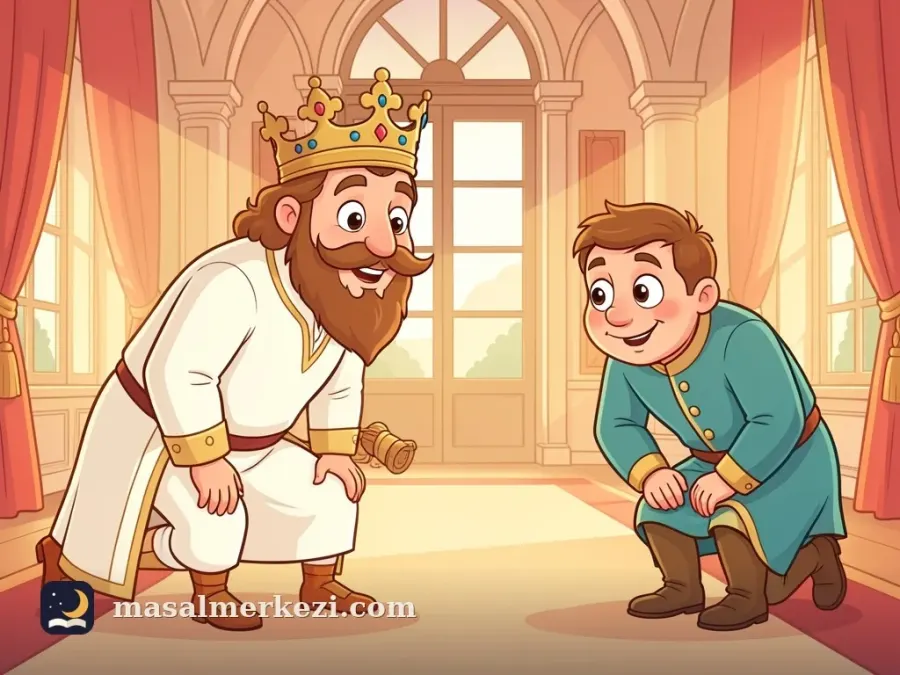
"Those must be wonderful clothes," thought the emperor. "If I wore them, I could find out which men in my empire are unfit for their posts. I could tell the clever ones from the fools. Yes, they must weave this cloth for me at once." And he gave the two swindlers a great deal of money so that they could begin their work.
The swindlers set up two looms and pretended to be working, but there was nothing at all on the looms. They demanded the finest silk and the most beautiful gold thread; they put it all in their own bags and worked away at the empty looms late into the night.
"I'd like to know how they're getting on with the cloth," thought the emperor. But it made him feel a little uneasy to think that anyone who was stupid or unfit for his office would not be able to see it. He believed he had nothing to fear for himself, but still he thought it better to send someone else first to see how things were going. Everyone in the city had heard of the cloth's wonderful power, and they were all eager to find out how bad or stupid their neighbours were.
"I'll send my honest old minister to the weavers," thought the emperor. "He can judge best how the cloth looks, for he is clever, and no one is better fitted for his office than he."
So the good old minister went into the hall where the two swindlers sat working at the empty looms. "Heaven help us!" he thought, and his eyes opened wide. "I can't see anything!" But he did not say so. The two swindlers asked him to come closer and asked whether the pattern was not beautiful and the colours not lovely. They pointed to the empty loom. The poor old minister stared and stared, but he could see nothing, because there was nothing there. "Good heavens," he thought, "can it be that I'm stupid? I never thought so, and nobody must know. Am I unfit for my office? No, I can't say that I can't see the cloth."
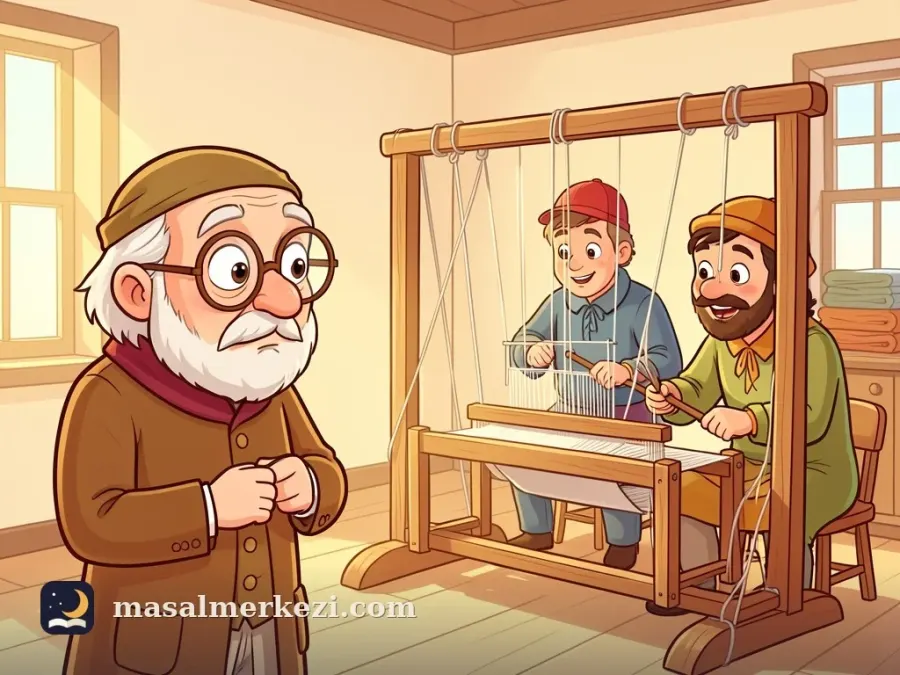
"Well, you aren't saying anything," said one of the weavers. "Oh, it's beautiful! Quite charming!" said the old minister, peering through his spectacles. "This pattern, these colours! Yes, I'll tell the emperor I like it very much." The swindlers named the colours and described the strange pattern. The old minister listened carefully so that he could repeat it all to the emperor, and he did. The swindlers asked for more money, more silk and gold. They put it all in their pockets; not a single thread went onto the loom.
Soon afterwards the emperor sent another honest official. The same thing happened to him: he looked and looked but saw nothing but the empty looms. "I'm not stupid," he thought, "so I must be unfit for my good post. That's very odd. But no one must find out." He praised the cloth and said how pleased he was with its beautiful colours and wonderful pattern. "It's truly enchanting," he told the emperor.
Everyone in the city was talking about the magnificent cloth. At last the emperor wanted to see it himself while it was still on the loom. With a crowd of chosen courtiers, including the two honest officials who had already been there, he went to the two cunning swindlers. They were weaving as fast as they could, but without a single thread.
"Isn't it magnificent?" said the two officials. "Will Your Majesty look at the pattern, at these colours!" And they pointed to the empty loom, for they thought the others could see the cloth. "What's this?" thought the emperor. "I can't see anything! This is terrible! Am I stupid? Am I unfit to be emperor? That's the worst thing that could happen to me." Then he said aloud, "Oh, it's very beautiful! It has my highest approval." He nodded contentedly and gazed at the empty loom; he did not want to say that he could see nothing. All his courtiers looked and looked, but they could see no more than the others. Still, like the emperor, they said, "Oh, it's very beautiful!" And they advised him to wear clothes made of this splendid new cloth for the first time in the great procession that was soon to take place.
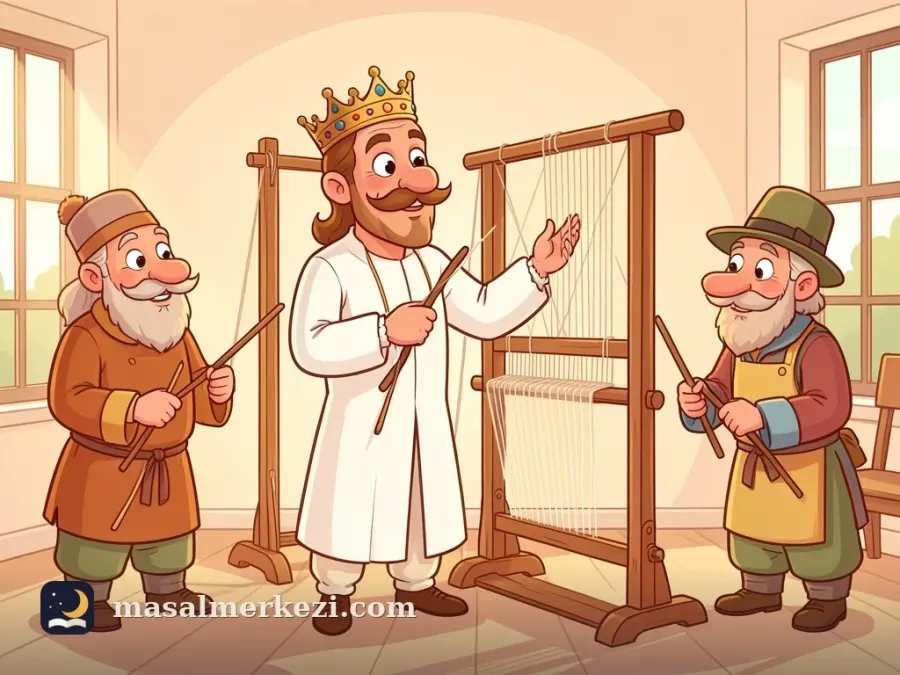
All through the night before the procession the swindlers stayed up with more than sixteen candles burning. Everyone could see how hard they were working to finish the emperor's new clothes. They pretended to take the cloth off the loom, they cut the air with big scissors, they sewed with needles without thread, and at last they said, "Now the clothes are ready!"
The emperor came with his noblest knights. The two swindlers lifted their arms as if they were holding something up: "Here are the trousers, here is the coat, here is the cloak! They're as light as a spider's web. You'd think you had nothing on at all, but that's the beauty of it." "Yes," said all the knights, but they could see nothing, because there was nothing there.
"Will Your Majesty be pleased to take off your clothes, so that we may put on the new ones in front of the big mirror?" said the swindlers. The emperor took off all his clothes. The swindlers pretended to put on each new garment they had made, one after another, and to fasten on the train. The emperor turned this way and that in front of the mirror. "Oh, how well they suit you! How beautifully they fit!" said everyone. "What a pattern! What colours! What a magnificent costume!"
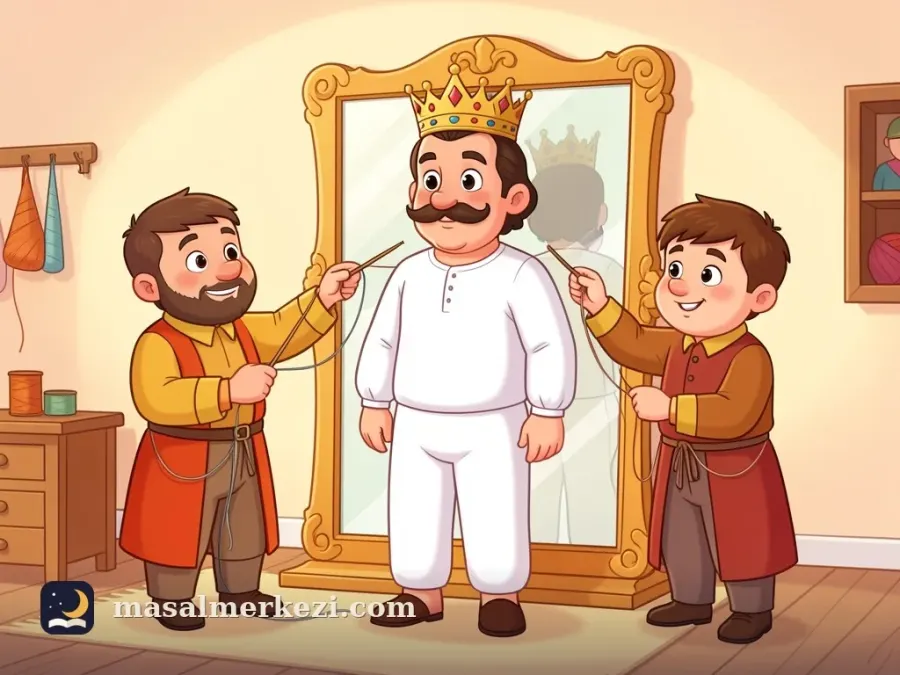
"The canopy that is to be carried over Your Majesty in the procession is waiting outside," said the master of ceremonies. "I'm ready," said the emperor. "Don't they fit well?" And he turned once more in front of the mirror, as if admiring his new clothes. The chamberlains who were to carry the train stooped and groped on the floor as if they were picking it up. They walked holding the air; they did not dare let anyone see that they could see nothing.
So the emperor walked at the head of the procession under the beautiful canopy. Everyone in the streets and at the windows said, "How beautiful the emperor's new clothes are! What a long train! How well they fit him!" No one wanted to admit that he could see nothing, for that would mean he was unfit for his office or very stupid. None of the emperor's clothes had ever been such a success.
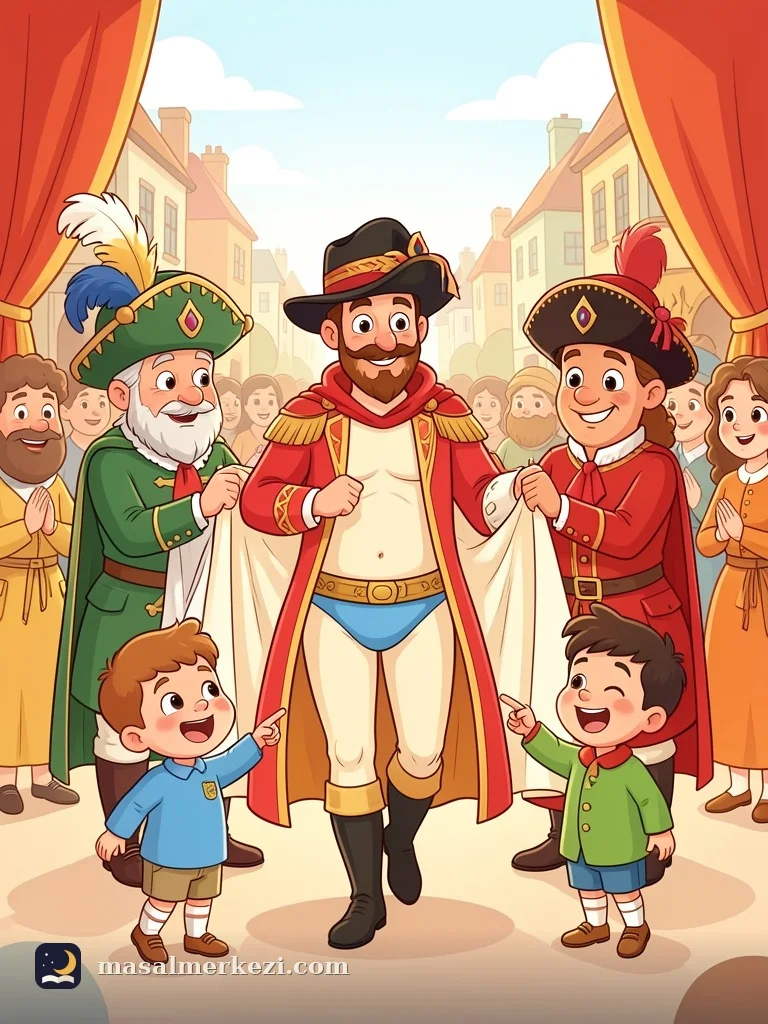
"But he hasn't got anything on!" said a little child. "Goodness, listen to the voice of innocence," said the child's father. And everyone whispered to one another what the child had said: "He hasn't got anything on! A little child says he hasn't got anything on!" At last the whole crowd shouted: "He hasn't got anything on!"
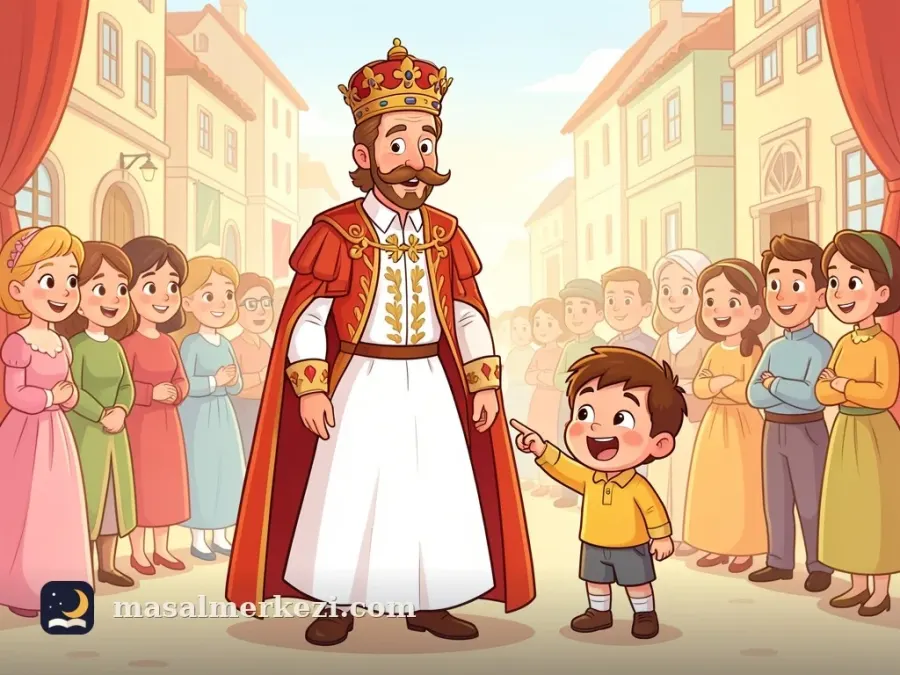
The emperor shivered, for he thought the people were right. But he said to himself, "Now I must go through with the procession." And he walked on even more proudly than before, and the chamberlains went on carrying the train that was not there at all.
The tale ends here. Sleep well.
The Emperor's New Clothes is a children's tale from Hans Christian Andersen, suitable for ages 5-10 and about 7 minutes long. Read it free on Masal Merkezi, play a lullaby or nature sound in the background, tap any word to see its Turkish meaning and save it to your favorites. For similar tales browse the Andersen Fairy Tales category.
Sign up and your favorites and reading list follow you on every device.