Ole the Sleep Fairy
Ole Shut-Eye, who sprinkles sweet milk in children's eyes to send them to sleep, tells little Hjalmar a different dream story every night for a whole week.
Tap a word to see it in Turkish · Long press to translate the whole sentence.
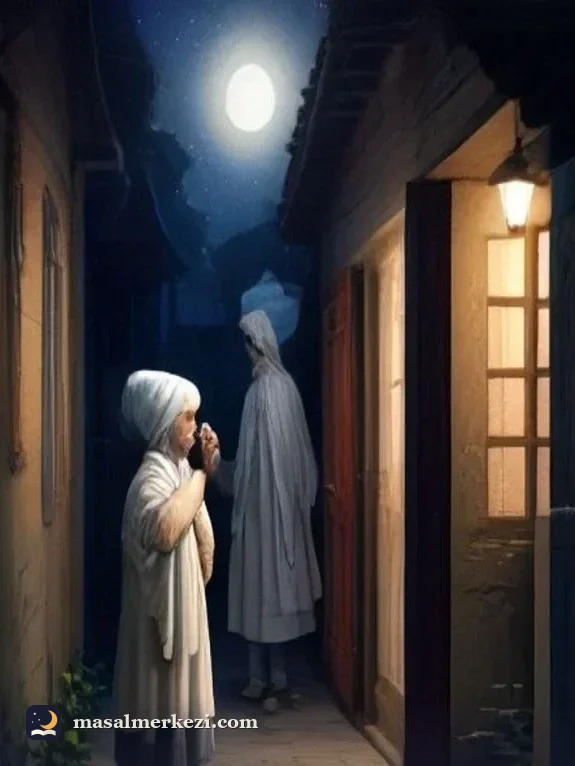
There is nobody in the whole world who knows as many stories as Ole Shut-Eye. He really knows how to tell them! In the evening, when the children are sitting nicely at the table or on their little stools, Ole Shut-Eye comes. He comes quietly up the stairs, because he walks in his socks. He opens the door very softly and, whoosh! he sprinkles sweet milk in the children's eyes, only a tiny bit, but enough that they cannot keep their eyes open. That is why they never see him. He creeps up behind them, blows gently on the back of their necks, and their heads grow heavy. But it doesn't hurt at all, because Ole Shut-Eye is very fond of children. He only wants them to be quiet, and for that they must be put to bed. The children have to be quiet so that he can tell them his stories.
When the children are asleep, Ole Shut-Eye sits down on the edge of the bed. He is beautifully dressed; his coat is made of silk, but it is impossible to say what colour it is, because it shines green, red and blue as he turns. Under each arm he carries an umbrella. One is covered with pictures, and he opens it over good children; then they dream the loveliest stories all night long. The other umbrella has nothing on it at all; he opens it over naughty children, and they sleep heavily until morning without dreaming anything.
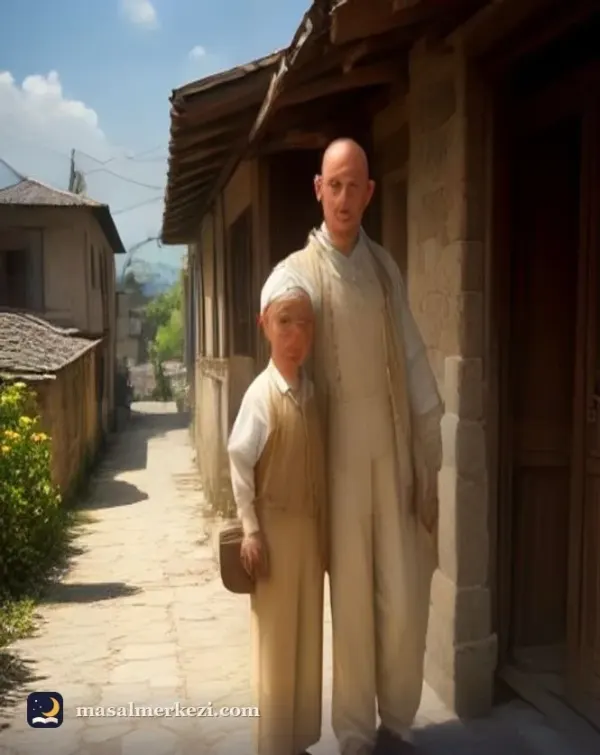
Now let us hear how Ole Shut-Eye came to a little boy named Hjalmar every evening for a whole week, and what he told him. There are seven stories, because there are seven days in a week.
MONDAY
"Listen now," said Ole Shut-Eye in the evening, when he had got Hjalmar into bed. "Now I'm going to decorate!" All the flowers in the flowerpots turned into big trees that stretched their long branches up to the ceiling and along the walls. The whole room looked like the loveliest bower. All the branches were full of flowers, and every flower was lovelier than a rose and smelled so sweet. And if you wanted to eat it, it was sweeter than jam. The fruit shone like gold, and there were buns full of raisins too. It was quite wonderful!
But at the same moment a dreadful groaning came from the drawer of the table where Hjalmar's schoolbooks lay. "What's that?" said Ole Shut-Eye, went to the table and opened the drawer. It was the slate; it was wriggling and squirming as if it wanted to tear itself apart, because a wrong figure had got into the sum. The slate pencil was hopping about on its string like a little dog, wanting to help the sum, but it couldn't. Then Hjalmar's copybook began to groan too; it was really sad to listen to! On every page the capital letters stood in a row, each with a small letter beside it; that was the copy. And beside them stood some other letters; Hjalmar had written those. They looked as if they had stumbled over the lines they were supposed to stand on.
"Look, this is how you should stand," said the copy letters. "Look, like this, slanting a little, with a strong stroke!" "Oh, we'd like to," said Hjalmar's letters, "but we can't, we feel so poorly!" "Then you'll have to have some medicine!" said Ole Shut-Eye. "Oh no!" they cried, and stood up so straight it was a pleasure to see. "Now I can't tell any stories," said Ole Shut-Eye. "Now I must drill them! One, two! One, two!" So he drilled the letters, and they stood as straight and healthy as any copy letter. But when Ole Shut-Eye had gone and Hjalmar looked at them in the morning, they were just as miserable as before.
TUESDAY
As soon as Hjalmar was in bed, Ole Shut-Eye touched all the furniture in the room with his little magic squirt, and at once everything began to talk. Everything talked about itself, except the spittoon; it stood silent and was cross that they were all so conceited. They thought only of themselves and talked only about themselves, and never thought of the spittoon, which stood so modestly in the corner and let itself be spat into.
Over the chest of drawers hung a big painting in a gilt frame. It was a landscape; there were tall old trees, flowers in the grass, and a big river that flowed round behind the forest, past many castles and far out into the open sea. Ole Shut-Eye touched the painting with his magic squirt, and the birds in the picture began to sing, the branches of the trees moved, and the clouds really sailed along; you could see their shadows passing over the landscape.
Then Ole Shut-Eye lifted little Hjalmar up to the frame, and Hjalmar put his feet into the picture, right into the tall grass. There he stood. The sun shone down on him through the branches of the trees. He ran to the water and got into a little boat that lay there. It was painted red and white, its sails shone like silver, and six swans with golden crowns on their heads and bright blue stars on their breasts drew the boat through the green forest. The trees told about robbers and witches, and the flowers told about lovely little elves and what the butterflies had told them.
The most beautiful fish, with scales of silver and gold, swam behind the boat. Sometimes they leapt up and fell back into the water with a splash. Red and blue birds, big and small, flew behind in two long rows. The gnats danced and the cockchafers buzzed. They all wanted to go with Hjalmar, and each of them had a story to tell. What a voyage that was! Sometimes the forest was thick and dark, sometimes it was like the loveliest garden, full of sunshine and flowers. There were great palaces of glass and marble. Princesses stood on the balconies, and they were all little girls Hjalmar knew and had played with. Each one held out her hand and gave him a sugar pig, nicer than any that a baker could sell.
As Hjalmar sailed past he took hold of one end of the sugar pig, and the princess held tight to the other, so each of them got a piece; the princess got the smaller piece and Hjalmar the much bigger one. In front of every palace little princes stood on guard. They saluted with golden swords and showered him with raisins and tin soldiers. They were real princes! Hjalmar sailed sometimes through forests, sometimes through great halls or right through the middle of a town. He also sailed through the town where his old nurse lived, the one who had carried him in her arms when he was very little and had loved him so much. She nodded and waved and sang the pretty little verse she had made up herself and sent to Hjalmar. All the birds sang with her, the flowers danced on their stalks, and the old trees nodded, as if Ole Shut-Eye were telling stories to them too.
WEDNESDAY
How the rain was pouring down outside! Hjalmar could hear it even in his sleep. When Ole Shut-Eye opened the window, the water came right up to the window sill. Outside it was a whole lake, but in front of the house lay a splendid ship. "Will you sail with me, little Hjalmar?" said Ole Shut-Eye. "Then you can go to foreign lands tonight and be back here by morning." And there stood Hjalmar in his best Sunday clothes on the splendid ship. At once the weather cleared, and they sailed through the streets and round the church, and now everything was a great open sea.
They sailed so far that no land was to be seen any more, and they saw a flock of storks flying to the warm countries. The storks flew one behind the other, and they had been flying a long time. One was so tired that its wings could hardly carry it. It flew at the very end of the line, and soon it was left far behind. At last it sank lower and lower with its wings spread out. It flapped a few more times, but it was no use. Its feet touched the ship's rigging, it slid down the sail and landed on the deck.
The cabin boy picked it up and put it in the coop with the hens, ducks and turkeys. The poor stork stood among them quite bewildered. "Just look at that fellow!" said all the hens. The turkey puffed himself up as big as he could and asked the stork who he was. The ducks waddled backwards and nudged each other: "Quack, quack, quack!" The stork told them about hot Africa, about the pyramids and about the ostriches that run across the desert like wild horses. But the ducks did not understand what he said and nudged each other and said: "Isn't he stupid?" "Yes, he's certainly stupid," said the turkey, and gobbled. The stork fell silent and thought of his Africa.
"What lovely thin legs you have!" said the turkey. "How much are they a yard?" "Quack, quack, quack!" laughed all the ducks, but the stork pretended not to hear. "You may laugh too," said the turkey to him, "for it was very witty. Or was it too low for you? Ah, ah! He's not very bright! Let's be amusing among ourselves." Then the hens clucked and the ducks quacked. They thought themselves very amusing.
But Hjalmar went to the coop, opened the back door and called the stork. The stork hopped out to him onto the deck. It was rested now, and it nodded to Hjalmar as if to thank him. Then it spread its wings and flew away to the warm countries. But the hens clucked, the ducks quacked and the turkey went red in the face. "Tomorrow we'll make soup of you!" said Hjalmar, and then he woke and was lying in his little bed. What a strange journey Ole Shut-Eye had taken him on that night!
THURSDAY
"I'll tell you what," said Ole Shut-Eye, "don't be afraid! I'm going to show you a little mouse." He held out his hand with the dear little creature in it. "It has come to invite you to a wedding. Tonight two little mice are getting married. They live under the floor of your mother's pantry. It must be a lovely home!" "But how can I get through the little mouse hole in the floor?" asked Hjalmar. "Leave that to me," said Ole Shut-Eye. "I'll make you small." Then he touched Hjalmar with his magic squirt, and at once Hjalmar grew smaller and smaller, until he was no bigger than a finger. "Now you can borrow the tin soldier's clothes. They'll fit you perfectly, and it looks so smart to wear a uniform in company."
"Yes, indeed," said Hjalmar, and in a moment he was dressed like the finest tin soldier. "Be so good as to sit in your mother's thimble," said the little mouse, "and I shall have the honour of pulling you." "Goodness, that the young lady should trouble herself!" said Hjalmar, and so they drove to the mouse wedding. First they went into a long passage under the floor; it was just high enough for a thimble to pass through, and the whole passage was lit with rotten wood. "Doesn't it smell lovely here?" said the mouse who was pulling him. "The whole passage has been greased with bacon rind! There's nothing nicer!"
Then they came to the bridal hall. On the right stood all the little lady mice, whispering and giggling as if they were making fun of each other. On the left stood all the gentlemen mice, stroking their whiskers with their paws. In the middle stood the bride and groom in a hollowed-out cheese rind, kissing in front of everyone, because they were engaged and would soon be married. More and more guests arrived; the mice nearly trampled each other. The bride and groom had placed themselves right in the doorway, so that no one could get in or out.
The whole room had been greased with bacon rind like the passage; that was the entire refreshment. For dessert a pea was brought in, in which a little mouse of the family had nibbled the initials of the bride and groom. That was really something quite out of the ordinary. All the mice said it was a lovely wedding and the conversation had been delightful. Then Hjalmar went home again. He had certainly been in very distinguished company, but he had had to squeeze himself very small to fit into a tin soldier's uniform.
FRIDAY
"It's unbelievable how many grown-ups want to have me with them!" said Ole Shut-Eye. "Especially those who have done something wrong. 'Dear little Ole,' they say to me, 'we can't close our eyes, and we lie all night seeing our wicked deeds. They sit on the edge of the bed like ugly little imps and sprinkle hot water on us. Do come and chase them away so we can sleep well.' Then they sigh deeply. 'We'll gladly pay. Good night, Ole, the money is on the window sill.' But I don't do anything for money," said Ole Shut-Eye.
"What are we going to do tonight?" asked Hjalmar. "I don't know, would you like to go to another wedding tonight? But it's not like yesterday's. Your sister's big doll, the one that looks like a man and is called Herman, is going to marry the doll called Bertha. It's the doll's birthday too, so there will be lots of presents." "Yes, I know about that," said Hjalmar. "Whenever the dolls want new clothes, my sister has either a birthday or a wedding for them. It must have happened a hundred times!" "Yes, but tonight is the hundred and first wedding, and when the hundred and first is over, everything is over. That's why this one will be extraordinary. Just look!"
Hjalmar looked at the table. There stood a little cardboard house with lights in the windows, and in front of it all the tin soldiers were presenting arms. The bride and groom sat on the floor, leaning against the leg of the table, looking very thoughtful; and they may well have had reason to. Ole Shut-Eye put on grandmother's black skirt and married them. When the wedding was over, all the furniture in the room sang this lovely song, which the pencil had written; it went to the tune of a soldiers' march:
"Our song blows like the wind, in honour of the bride and groom! Both of them stand stiff and straight, made of glove leather they are! Hurrah, hurrah, for bride and groom! Let the wind and sun salute them!"
Then came the presents, but they did not want anything to eat, because they were satisfied with love. "Shall we go to the country or take a trip to a foreign land?" asked the groom. So they called the swallow, who had travelled a great deal, and the old yard hen, who had hatched five broods of chicks, to give their advice. The swallow told them about the lovely warm countries where the grapes hang in big, heavy bunches, where the air is soft and the mountains glow with colours unknown here. "But they don't have our green cabbage there!" said the hen. "I was in the country one summer with all my chicks. There was a gravel pit we could go into and scratch about. And we were allowed into the cabbage garden! Oh, how green it was! I can't imagine anything lovelier!"
"But one cabbage is just like another," said the swallow. "And the weather is often bad here." "One gets used to it," said the hen. "But it's cold here, it freezes." "That's good for the cabbage," said the hen. "Besides, it can be warm here too! Didn't we have a summer four years ago that lasted five weeks? It was so hot you could hardly breathe! And we don't have the poisonous creatures they have in foreign lands. And we don't have robbers here either! Anyone who doesn't think our country is the loveliest is a wicked creature; really he doesn't deserve to be here!" And then the hen burst into tears. "I've travelled too! I went more than twelve miles in a coop. There's no pleasure in travelling!"
"Yes, the hen is a sensible woman," said the doll Bertha. "I don't want to go to the mountains either, because first you go up and then you have to come down again! No, let's go to the gravel pit outside the gate and take a walk in the cabbage garden." And so they did.
SATURDAY
"Are you going to tell me stories now?" asked little Hjalmar as soon as Ole Shut-Eye had put him to sleep. "We haven't time for that tonight," said Ole Shut-Eye, and he opened his loveliest umbrella over him. "Look at these Chinamen!" The whole umbrella looked like a big Chinese bowl, with blue trees and pointed bridges with little Chinamen standing on them, nodding their heads. "We must get the whole world nicely decorated for tomorrow," said Ole Shut-Eye. "Tomorrow is a holiday, it's Sunday. I must go up the church tower to see whether the little church elves are polishing the bells so they will ring nicely. I must go out to the fields to see whether the winds are blowing the dust off the grass and leaves. And the biggest job is taking down all the stars and polishing them. I gather them in my apron. But first each one has to be numbered, and the holes where they sit have to be numbered too, so that they can be put back in their right places; otherwise they won't sit firmly, and there will be too many shooting stars, because one after another would fall down."
"Look here, listen to me, Mr Shut-Eye," said an old portrait that hung on the wall beside Hjalmar's bed. "I am Hjalmar's great-grandfather. I thank you for telling the boy stories, but you mustn't muddle his head. The stars can't be taken down and polished! The stars are round worlds like our earth, and that's just what's good about them." "Thank you, old great-grandfather," said Ole Shut-Eye. "Thank you very much! You are the head of the family, you are the ancestor; but I am older than you! I am an old heathen. The Romans and Greeks called me the Dream God! I have been in the noblest houses and I still go there! I know how to deal with great and small! Now you may tell the stories!" And Ole Shut-Eye took his umbrella under his arm and went away. "These days you can't even give your opinion!" said the old portrait. And Hjalmar woke up.
SUNDAY
"Good evening!" said Ole Shut-Eye. Hjalmar nodded, then jumped up and turned his great-grandfather's portrait to face the wall, so that it wouldn't interrupt like yesterday. "Now you must tell me about the five green peas that lived in one pod, and about the rooster's foot that courted the hen's foot, and about the darning needle that was so fine it thought it was a sewing needle!" "You can have too much of a good thing," said Ole Shut-Eye. "You know, I'd like to show you something else. I want to show you my brother. His name is Ole Shut-Eye too, but he never comes to anyone more than once. And when he comes, he takes you on his horse and tells you stories. He knows only two stories. One is more beautiful than anyone can imagine, and the other is too terrible to describe."
Then Ole Shut-Eye lifted little Hjalmar up to the window and said: "There you will see my brother, the other Ole Shut-Eye. They also call him Death! You see, he doesn't look at all as dreadful as he does in the picture books, where he is just a skeleton of bones. No, he has silver embroidery on his coat. He wears the finest cavalry uniform! A black velvet cloak flutters behind him over the horse! Look how he gallops!"
And Hjalmar saw how that Ole Shut-Eye galloped along, taking young and old up onto his horse. Some he set in front of him and some behind, but he always asked first: "What's on your report card?" "Good!" they all said. "Well, let me see," he said. So each of them had to show the report card. Those who had "Very good" and "Excellent" sat in front, and he told them the lovely story. Those who had "Fair" and "Poor" had to sit behind and listen to the terrible one. They trembled and wept and wanted to jump off the horse, but they couldn't, because they were stuck fast to it at once.
"But Death is the most beautiful Ole Shut-Eye!" said Hjalmar. "I'm not afraid of him!" "You don't need to be," said Ole Shut-Eye. "Just make sure you have a good report card!" "Yes, that's instructive!" muttered great-grandfather's portrait. "It does help to give one's opinion after all!" And he was satisfied.
So that is the story of Ole Shut-Eye. Tonight he can tell you more himself! And now close your eyes, because there is someone creeping past the door in his socks. Perhaps he will sprinkle a little sweet milk in your eyes and open his picture umbrella over you. Good night!
The tale ends here. Sleep well.
Ole the Sleep Fairy is a children's tale from Hans Christian Andersen, suitable for ages 5-10 and about 19 minutes long. Read it free on Masal Merkezi, play a lullaby or nature sound in the background, tap any word to see its Turkish meaning and save it to your favorites. For similar tales browse the Bedtime Stories category.
Sign up and your favorites and reading list follow you on every device.