What Father Does Is Always Right
A farmer takes his horse to market and trades it for a cow, the cow for a sheep, the sheep for a goose, the goose for a hen and the hen for a sack of rotten apples; and still his wife says he is right.
Tap a word to see it in Turkish · Long press to translate the whole sentence.
Now I'm going to tell you a story I heard when I was little. Every time I think of it, it seems lovelier to me. Stories are like people; they grow lovelier as they grow older, and that is a very fine thing!
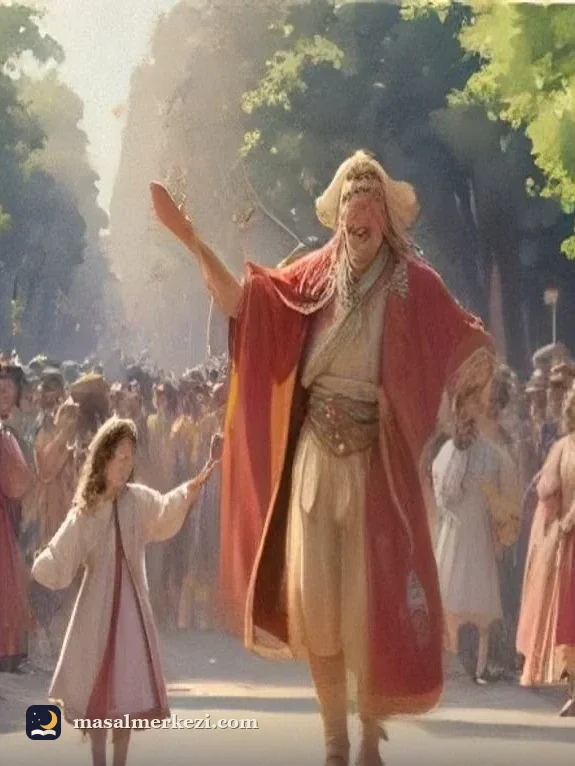
You've seen an old farmhouse out in the country, haven't you? It has a thatched roof with moss and weeds growing on it. There is a stork's nest on the ridge of the roof; you can't do without the stork. The walls are crooked, the windows are low, and only one window can be opened. The oven sticks out like a fat little belly. The lilac bush hangs over the fence, and beneath it there is a little pond with a duck or some ducklings swimming in it, under a gnarled old willow. And yes, there is a dog on a chain too, barking at everyone who comes.
There was just such a farmhouse, and in it lived an old couple, a husband and wife. They had very little, but there was one thing they could not do without: they had a horse, and it grazed in the ditch by the road. When the old farmer rode to town he rode the horse, and the neighbours borrowed it, and in return they did him a good turn. But it would be better to sell the horse, or to trade it for something more useful. But what could that be?
"You'll know best, Father," said his wife. "There's a fair in town today; take the horse there, sell it for money or trade it for something good. Whatever you do is right. Go to the fair!" Then she tied his neckerchief, because she could do that better than he could. She tied a double bow, and he looked very handsome. Then she brushed his hat with the palm of her hand, kissed him on his warm mouth, and he rode off on the horse that was to be sold or traded. Yes, Father knew what he was about.
The sun was blazing and there was not a cloud in the sky. The road was dusty, because many people were going to the fair, in carts, on horseback and on foot. The sun was scorching and there was no shade anywhere on the road. A man was walking along driving a cow; it was as lovely a cow as you could wish for. "I'm sure she gives fine milk," thought the farmer. "That would be a good trade. Hey, you with the cow!" he said. "Shall we have a little talk? Look, I suppose a horse is worth more than a cow, but never mind. A cow is more use to me. Shall we trade?" "Certainly," said the man with the cow, and they traded.
So that was done, and the farmer could have turned back; he had done what he set out to do. But since he had made up his mind to go to the fair, he wanted to go there anyway, just to look. So he went on with his cow. He walked fast, and the cow walked fast, and before long they caught up with a man driving a sheep. It was a fine, fat sheep with plenty of wool. "I'd like to have that," thought the farmer. "There's enough grass for it along our ditch, and in winter we can take it into the house. Really, it's more sensible to keep a sheep than a cow. Shall we trade?" The owner of the sheep was very pleased, and the trade was made. The farmer went on with his sheep.
Beside a stile he saw a man with a big goose under his arm. "What a heavy goose you have!" said the farmer. "Plenty of feathers and fat. It would look fine tied by a string at our pond! Mother would have peelings to collect for it. How often I've heard her say, 'If only we had a goose!' Now she can have one. Shall we trade? I'll give you the sheep, and thank you too." The other had no objection at all, and the trade was made; the farmer got the goose.
He was close to the town; the crowd on the road grew bigger and bigger. People and animals were swarming. They stretched along the road and the ditch right up to the toll-keeper's potato field. The toll-keeper's hen was tied up there so that it would not be frightened by the crowd and run away. It was a short-tailed hen; it winked one eye and looked very clever. "Cluck, cluck!" it said. I can't tell you what it meant by that, but when the farmer saw it he thought: "That's a finer hen than even the parson's broody hen; I'd like to have it! A hen always finds a grain; it can look after itself. If I trade the goose for it, that's a good trade. Shall we trade?" "Trade?" said the other. "Well, that's not bad at all!" And they traded. The toll-keeper got the goose, and the farmer got the hen.
He had done a lot of business on the way to town. It was hot and he was tired. He wanted a drink and a bite of bread. He came to an inn and was about to go in, but the inn servant was just coming out of the door; they met in the doorway. The servant was carrying a sack filled to the brim. "What have you got there?" asked the farmer. "Rotten apples," said the servant, "I'm taking them to the pigs." "What a lot! I'd like Mother to see that. Last year our old tree by the peat shed gave only a single apple. We kept it, and it stood on the cupboard until it split and rotted. 'That's wealth,' Mother said. Here she could see a great deal of wealth; yes, I'd like to show her this!" "Well, what will you give?" said the servant. "What will I give? I'll trade my hen." So he gave the hen, took the apples, went into the inn parlour and straight to the counter. He leaned the sack against the stove, without thinking that the stove was lit.
There were many strangers in the room; horse dealers, cattle dealers and two Englishmen. These Englishmen were so rich that their pockets were bursting with gold coins. They loved to bet, as you will soon hear! "Sss, sss!" What was that noise by the stove? The apples were beginning to roast. "What's that?" They soon found out; they heard the whole story of the trading of the horse, the cow, the sheep, the goose, the hen and the rotten apples.
"You'll get a beating from your wife when you get home!" said the Englishmen. "There'll be a fine row!" "She'll kiss me, not beat me," said the farmer. "Mother will say, 'What Father does is always right.'" "Shall we bet on it?" they said. "A barrel of gold! A hundred pounds to the bushel!" "A bushel will do," said the farmer. "I've only got a bushel of apples. But if Mother and I are thrown in, I think the measure will be full." "Done! Done!" they said, and the bet was made.
The innkeeper's cart was brought out, the Englishmen got in, the farmer got in, the rotten apples got in, and they drove to the farmer's house. "Good evening, Mother!" "Good evening to you, Father!" "I've made the trade!" "Yes, you know what you're doing!" said his wife, and she hugged him round the waist; she saw neither the sack nor the strangers. "I traded the horse for a cow." "Thank God, milk!" said the wife. "Now we can have milk dishes, butter and cheese on the table. What a lovely trade!" "Yes, but I traded the cow for a sheep." "That's even better!" said the wife. "You always think of everything. We have just enough grass for a sheep. Now we can have sheep's milk and sheep's cheese, woollen stockings, even a woollen nightshirt! A cow doesn't give that; she sheds her hair. What a thoughtful man you are!"
"But I traded the sheep for a goose." "Then this year we really shall have goose for Martinmas, dear Father! You always think of what will please me. What a lovely thought! We'll tie the goose on a string, and it'll get even fatter by Martinmas." "But I traded the goose for a hen," said the man. "A hen? That's a good trade!" said the wife. "A hen lays eggs and hatches them; we'll have chicks, a whole henhouse full of hens! I've always wanted that!" "Yes, but I traded the hen for a sack of rotten apples."
"Now I must kiss you!" said the wife. "Thank you, my dear husband! Now let me tell you something. After you'd gone, I thought I'd make you something really nice: an omelette with onions. I had the eggs, but I had no onions. So I went to the schoolmaster's wife. I know they have onions, but she's a stingy woman, very mean. I asked her to lend me some. 'Lend?' she said. 'Nothing grows in our garden, not even a rotten apple! I couldn't even give you one!' Now I can lend her ten, or a whole sack of rotten apples! Isn't that funny, Father!" And she kissed him right on the mouth.
"Now I like that!" said the Englishmen. "Always downhill, and always cheerful! That's worth paying for!" And they paid the farmer a bushel of gold coins; he was not beaten, he was kissed. Yes, it always pays when the wife says and shows that her husband is the wisest man and that what he does is always right. You see, that's a story! I heard it when I was little, and now you've heard it too and you know: What Father does is always right.
The tale ends here. Sleep well.
What Father Does Is Always Right is a children's tale from Hans Christian Andersen, suitable for ages 5-10 and about 9 minutes long. Read it free on Masal Merkezi, play a lullaby or nature sound in the background, tap any word to see its Turkish meaning and save it to your favorites. For similar tales browse the Andersen Fairy Tales category.
Sign up and your favorites and reading list follow you on every device.